


How We Support Schools & Educational Environments
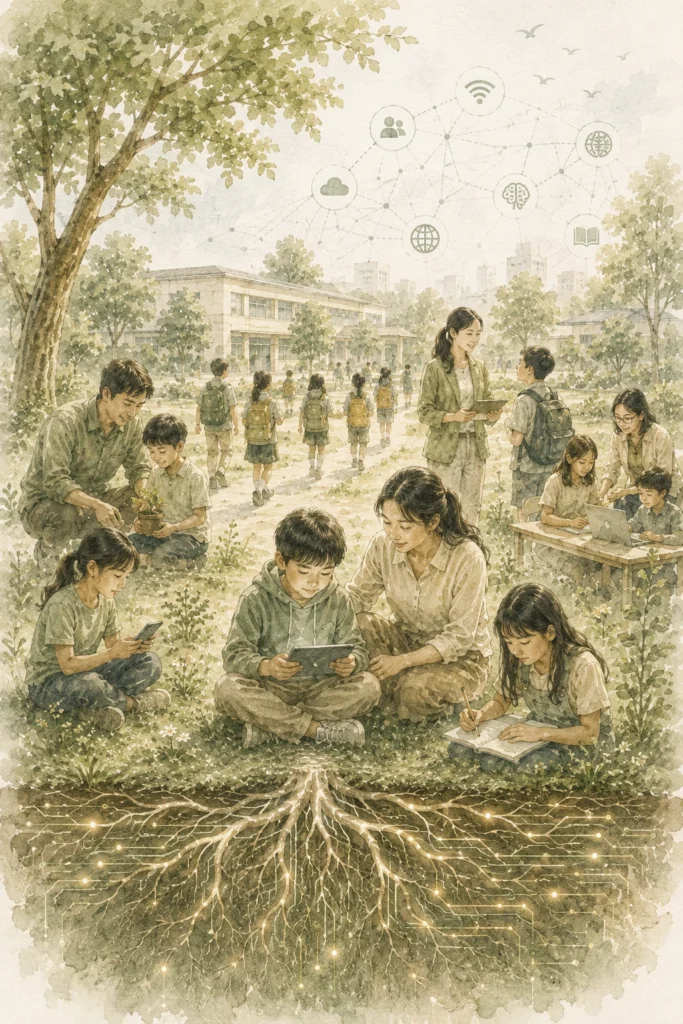
A Whole-School Ecosystem of Support
A student's well-being cannot be strengthened through work with the child alone.
The adults who teach them, the parents who raise them, the leaders who shape school culture, and the systems connecting home and school all influence the environment in which development takes place.
Our services are designed to strengthen the entire developmental ecosystem surrounding the student, from individual child and family support to educator development, leadership, professional education and whole-school culture.
Child & Adolescent Emotional, Mental, Relational and Behavioural Developmental Well-Being
Supporting the person behind the student.
Children and adolescents may experience emotional overwhelm, anxiety, behavioural difficulties, relationship challenges, low confidence, identity struggles, difficulties with emotional regulation, transitions, family changes, peer difficulties or periods in which they simply need additional developmental support.
We provide developmentally responsive support that looks beyond the presenting difficulty to understand the whole young person, their developmental stage, nervous system, relationships, experiences, environment and emerging capacities.
Support may focus on navigating an existing difficulty or proactively developing emotional intelligence, confidence, self-awareness, regulation, identity, character building, resilience, communication and healthy relational capacities.
Where appropriate, we collaborate with parents, schools and other professionals so that the child experiences a more coherent network of support around them.
Parent & Family Emotional, Mental & Relational Well-Being
Because supporting students also means supporting the adults raising them.
What happens within the family inevitably intersects with a child's experience of school. Parents today are navigating extraordinary demands while raising children in an increasingly complex developmental, social and digital landscape. At times, even deeply committed parents may struggle to understand behaviour, manage conflict, maintain connection or know how best to respond to their child's changing needs.
We support parents and families with developmental understanding, emotional and nervous system regulation, parent–child relationships, communication, attachment, family dynamics, transitions, and challenging developmental periods.
Rather than positioning schools and parents as opposing sides of a concern, our work can help strengthen the school–family partnership around the child's shared needs.
Move from Educator Burnout to Holistic Well-Being through Coaching Culture
Supporting the adults who hold the developmental environment every day.
Educators are being asked to hold increasingly complex roles. Alongside teaching and curriculum responsibilities, they encounter behavioural challenges, emotional distress, parent expectations, safeguarding concerns, administrative demands and the realities of their own lives.
Yet the adult nervous system matters.
Students rely heavily on the adults around them for emotional safety, co-regulation, modelling and relational stability. An educator who has the capacity to regulate, reflect, communicate and respond rather than react can profoundly influence the climate of a classroom.
We work with schools to strengthen educator emotional well-being, nervous-system awareness, relational intelligence, communication, reflective practice and coaching skills.
Beyond individual well-being initiatives, we can support schools in developing a coaching culture, one in which conversations across the organisation become more reflective, collaborative, psychologically safe and growth-oriented.
Because when educators flourish, the impact reaches far beyond the educator. It reaches every student they teach.
Become an Edu-Coach
Trauma-Informed Child, Adolescent Development & Parenting Coach Education for Educators
Imagine if developmental and coaching expertise existed within the everyday relationships surrounding every child. Schools should not always have to wait for difficulties to become significant enough to require external intervention.
Through our specialised coach education, educators can develop a sophisticated understanding of the developing brain, child and adolescent development, attachment, nervous system regulation, trauma-informed practice, parenting, and developmental coaching.
This goes beyond traditional coaching skills. Educators learn to understand the developmental person they are coaching, recognising that coaching an adolescent, supporting a parent or responding to a dysregulated child requires fundamentally different considerations from coaching a fully developed adult.
The aim is not to turn teachers into therapists or replace mental health professionals. It is to expand the developmental capability already present inside the school.
By equipping educators with developmentally and trauma-informed coaching competencies, schools can build greater internal capacity for early conversations, student support, parent engagement, mentoring and developmental guidance, so that more young people have access to adults who know not only how to educate them, but how to understand the developing human being in front of them.
Trauma-Informed Leadership & Leadership Coach Education
School culture is shaped from the top, and experienced through relationships at every level.
Trauma-informed leadership extends beyond understanding trauma. It asks leaders to consider how safety, trust, communication, power, belonging, regulation and relationships are experienced throughout an organisation.
We work with school leaders to develop trauma-aware, relationally intelligent and coaching-informed leadership practices that support healthier interactions across the school community.
This includes understanding how stress and nervous system states influence communication and decision-making; navigating difficult conversations and conflict; strengthening psychological and relational safety; supporting educator well-being; engaging parents more effectively; and creating environments in which students, staff, and families feel heard, respected, and able to participate meaningfully.
The objective is not simply better leadership performance. It is the development of a school culture in which people can function, communicate, collaborate and develop more effectively because the system itself supports greater safety and connection.
Parent Education & School–Family Partnership
Helping schools and families speak a shared developmental language.
Some of the most challenging situations in schools arise not because educators or parents do not care, but because the adults surrounding the child are operating from different understandings of behaviour, development and what the child needs.
Through parent education, workshops, developmental programmes and facilitated conversations, we help school communities build greater understanding around topics such as child and adolescent development, the developing brain, emotional regulation, attachment, behaviour, boundaries, digital environments, parent–child relationships and navigating adolescence.
This can help schools move beyond one-off parent information sessions toward building a more informed and connected parent community, strengthening the partnership between home and school around the developing child.
Professional Development, Workshops & Whole-School Learning
Translating developmental science into everyday educational practice.
We provide tailored professional development for educators, counsellors, pastoral teams, learning support professionals, school leaders, and wider school communities.
Training can be designed around the needs of an individual school and may include child and adolescent brain development, nervous system regulation, trauma-informed education, attachment, understanding behaviour, emotional development, co-regulation, relational safety, coaching conversations, parent engagement, educator well-being, developmental transitions, and psychologically informed school culture.
Our focus is not simply knowledge acquisition. We help educational communities translate developmental understanding into how adults see, interpret and respond to young people in everyday moments.
Leadership Coaching for Educators & School Leaders
Supporting the people who lead, influence and hold responsibility for others.
We provide leadership coaching for educators and school leaders who want space to reflect, strengthen their leadership capacity and navigate the relational and emotional complexity of school environments.
Coaching may support leadership identity, communication, decision-making, difficult conversations, conflict, boundaries, team dynamics, emotional regulation, professional transitions and sustainable leadership practice.
Our approach goes beyond performance alone, integrating developmental, relational and nervous-system-informed perspectives to support the whole person within the leadership role.
The aim is to help educators and school leaders lead with greater self-awareness, clarity, relational intelligence and intentionality, recognising that how leaders show up inevitably shapes the culture experienced by staff, students and families.

Leadership & Vision
Program Directors

Lux Hettiyadura
Child & Family Development Specialist | ICF PCCLux Hettiyadura is a Child & Family Development Specialist, ICF Professional Certified Coach (PCC), Coach Educator, and Program Director at Ignite Global, with over 15 years of experience working across child development, parenting, education, and family well-being.
More About Lux →
Fernando Hettiyadura
Registered Eclectic Psychotherapist | ICF MCCFernando Hettiyadura is a pioneer in the fields of professional coaching, psychotherapeutic, and spiritual practices encompassing Psychedelic Integration as the center of his interventions. He is a Registered Eclectic Psychotherapist and a Master Certified Coach (MCC).
More About Fernando →